
Jean Girgis · 2014-02-27
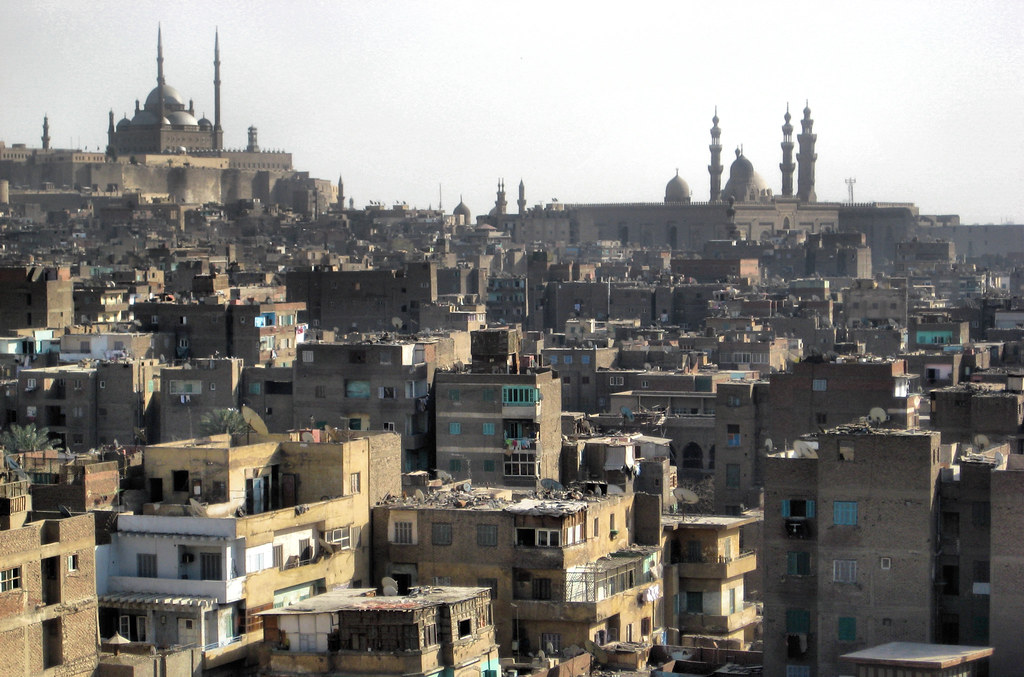
Since today’s occupation is an occupation of ideas, globalization has played the biggest role as a weapon, infecting Arab peoples with an unjustified Western modernity.
Egypt has carried the idea of worship since ancient times; it is almost her first calling from God. Globalization has clearly affected all her religions.
On the Christian side
Western music — much of it poor — has spread through every age group. The level of creativity and Egyptian and Arab depth in choosing worship words has weakened. Hymns have become extremely short because of the age of speed. There is little variety in instruments.
On the Islamic side
The same last two points apply. The art of the ibtihal — the deep, improvised supplication associated with singers like Al-Helbawy, Al-Naqshabandi and others — has been lost, replaced by Maher Zain, Sami Yusuf and others. Deep lyrical imagery is rare; the words are shallow.
The result is a Westernized generation that hates what is Egyptian, and a small group of fundamentalists “defending the old.” Because we are a society that loves extremes, very few mix cultures while keeping their own Egyptian culture. Gatherings are full of clashes between “the kids” and “the backward,” and neither convinces the other.
As a teacher, I believe Egyptian thought will remain, whatever the strength of Western thought. The proof is how folk songs swept every layer of society as soon as they appeared in their new style, because they are purely Egyptian — even if, in my opinion, they are the lowest form of art.
Enough imitation. As God gave you your own way of thinking, give it in your own way. Speak to people in their language — or, more accurately, in your language. However hard you try, you will not play or sing like them, because the spirit is Egyptian.
I want to see the tabla, the cymbals, and the tambourine with the other instruments again. I want to stop hearing that worship can only be Western. When you mix, I want you to know what you are doing — not variety for the sake of variety.
A small example: there are four places — Western for God, Western for Satan, Eastern for God, Eastern for Satan. If you leave your place in worship, part of the spiritual battle is left empty, like occupied land. Hold your place — the place of your culture.
None of this means I am against any color. I love all colors. But when I offer something, I offer it in my language, in my way — even when I offer something Western, I offer it in their language, in my way.