
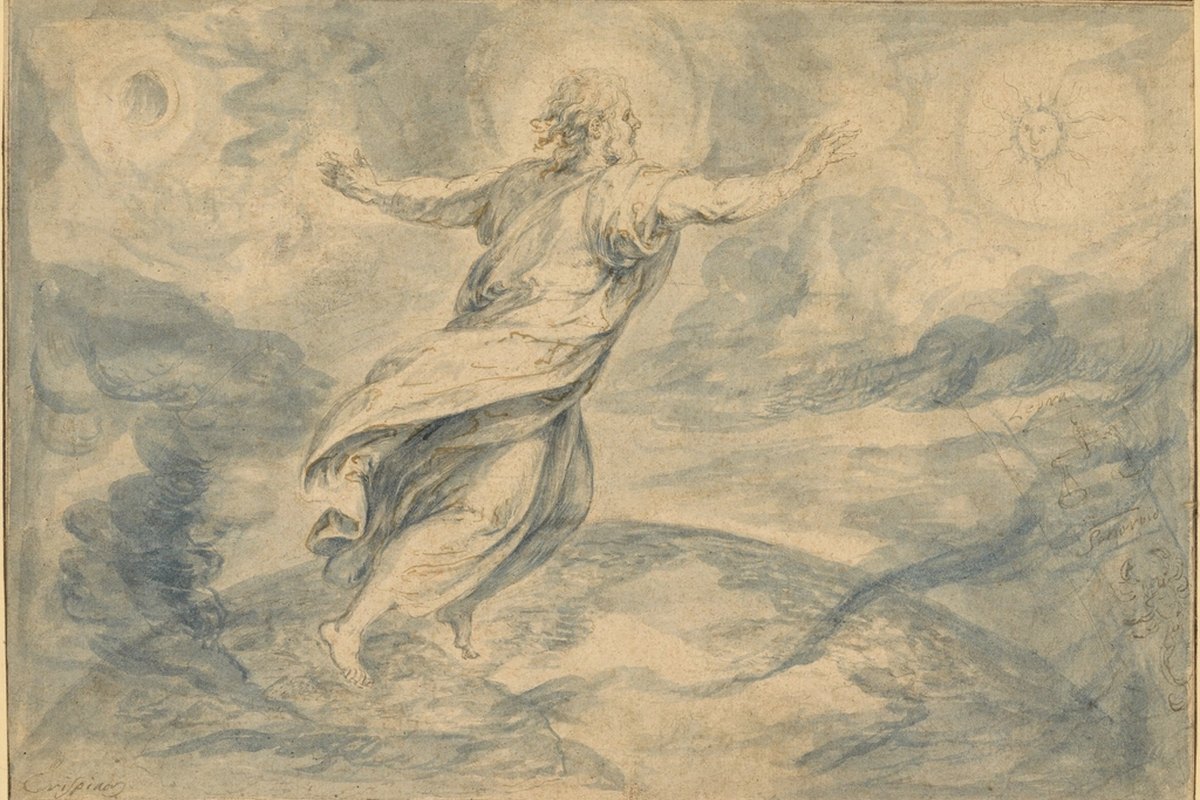
Gen 1:1-3
How do you summarize the meaning of these verses?
In the beginning, God created the heavens and the earth. The earth had no form, and the surface of the deep waters was covered with darkness. This was the initial state of the earth, that it was unproblematic, and the water and fog covered the earth, thus preventing the presence of light, obscuring the vision, and making it unclear. In this situation, the Spirit of God was moving on the surface of the waters, and God saw that the best thing the earth needed in this situation was light to clarify and reveal the nature of things, so He said, “Let there be light,” and immediately there was light.
These three verses explain to us one of the sublime attributes of God that is not shared with man, which is his ability to create. In addition, they reveal to us how God sets a limit and a shape for everything, and that in our lives we need light and this is the starting point for any change or formation, because light reveals our nature and shows our corruption and the dark areas in our lives that need to be changed.
Part one
Understanding the hermeneutic spiral, that is, the dynamic interrelationship between biblical interpretation (critical interpretation), systematic theology, and hermeneutics (principles of interpretation) is an essential key to understanding how our theological presuppositions affect our reading of the Bible. This is done by allowing these three elements to interact so that we can, even partially, improve our ability to repel false corruption. This interaction has a role in understanding individual texts because it is necessary to base theology on the teaching of the Bible, and this includes looking at individual texts that teach specific topics. Moreover, theological truth helps and guides us in choosing the correct reading of a particular passage from the incorrect reading.
The interaction between the three elements allows us to help others (followers of other sects) by asking questions and opening a space for dialogue with them, discussing the interpretation they offer, the reasons why they interpret the text in this way, their theological assumptions, and their principles of interpretation. We need to listen to the other person. Because the interaction between critical interpretation, systematic theology, and hermeneutics forms a “spiral” (rather than a closed circle), allowing us to grow in understanding and correct our errors.
Part Two:
The Bible is Christ-centered, not just God in general. This focus on Christ is not limited to the New Testament, but includes the entire Old Testament. This understanding is considered a controlling tool (interpretive control) that helps us set correct limits for the interpretation of texts, and avoid subjective misinterpretations or those that stray from divine intent. Looking at Christ as the goal of the Bible also helps us direct interpretation to the salvific purpose and how each text refers to Christ (Christocentrism), in addition to helping us understand the Old and New Testaments and uniting them together.
Part Three:
Discovering that the entire Old Testament is Christ-centered is one of the greatest challenges in biblical interpretation, but we must grow with this goal, because Jesus himself says this is the focus of the Old Testament. The difficulty is that Christ is not explicitly mentioned in every book, and the Old Testament is full of “types” that point to Christ (such as Joseph, Moses, David), or experiences (such as suffering and then salvation in the Psalms). These are all not just historical stories, but shadows of Christ’s suffering and glory (as in Luke 24:25–27, 44–47), where there is difficulty distinguishing between the direct literal meaning (the historical context) and the symbolic or introductory meaning (the reference to Christ). Christ is the focus of the Old Testament, but that does not mean that every verse speaks directly about him, but rather that the entire plan of redemption is directed to him. Jesus himself practiced interpreting the Bible, and he is the greatest interpreter, and he said to his disciples: “It all speaks about him.” If talking about it is implicit or symbolic and not explicit, then seeing it requires the Holy Spirit to give us enlightened spiritual eyes to understand the books.